

Date :
08/17/2026
Medically Reviewed By:
Dr. Samiullah Kundi, MD, Board-Certified Physician
Disclaimer:
The information provided on this page is for educational and informational purposes only and is not intended as a substitute for professional medical advice, diagnosis, or treatment. Always seek the advice of your physician or other qualified healthcare provider with any questions you may have regarding a medical condition or treatment plan.
Table of Contents
If a diagnosis of disc desiccation has left you feeling frustrated and sidelined, you don’t have to manage the stiffness and pain on your own. At Indiana Neurology and Pain Center, our specialists can design a targeted, safe rehabilitation strategy to help hydrate your spinal joints and get you moving comfortably again.
How Movement Actually Hydrates the Spine
To get why a physical therapy routine works, you need to look at how your back feeds itself. Your intervertebral discs have a tough outer shell and a soft, jelly-like center made mostly of water. As you age—or if you suffer an injury—that center dries out. The disc shrinks. As it flattens, the vertebrae move closer together, shrinking the tiny gaps where your spinal nerves exit.Unlike most of your muscles and organs, adult spinal discs don’t have a direct blood supply. They can’t just pull oxygen and water straight from a vein. Instead, they rely on a mechanical sponge effect called imbibition.When you put weight on your spine, fluid pushes out of the discs. When you take the pressure off or stretch the spine, fresh fluid and nutrients get sucked back in. Sitting still at a desk all day basically turns off this pumping mechanism. Controlled movement turns it back on.This is exactly why disc desiccation exercises are so crucial. When done correctly, this alternating compression and decompression flushes out inflammatory waste and draws fresh hydration into the disc, helping it maintain whatever height and flexibility it has left.Building a Safer Spinal Routine
People often think a bad back means they should just rest in bed. But resting too much actually lets the muscles around your spine waste away, which just puts more pressure on your already weakened discs. Building a daily routine around degenerative disc exercises takes the physical strain off your joints. It trains your back muscles to naturally hold a healthier posture without you having to think about it constantly.Before jumping into any new routine, you have to prioritize protecting your lower back. Just stick to these three ground rules.- First, stay completely neutral. That means avoiding deep, forced bends or harsh arches so your spine stays naturally stacked.
- Wake up the core: Focus on the deep muscles underneath your abs. They act like a built-in back brace.
- Stretch first: Always open up the joint spaces with light stretching before adding any kind of resistance.
The Best Exercises for Degenerative Disc Disease
You don’t need a grueling workout to see results. The smartest routines actually mix light stretching with low-impact strength work. If you’re looking for the absolute best exercises for degenerative disc disease, start with movements that focus on stability rather than heavy lifting.Starting Easy: Stretching and Decompressing the Joints
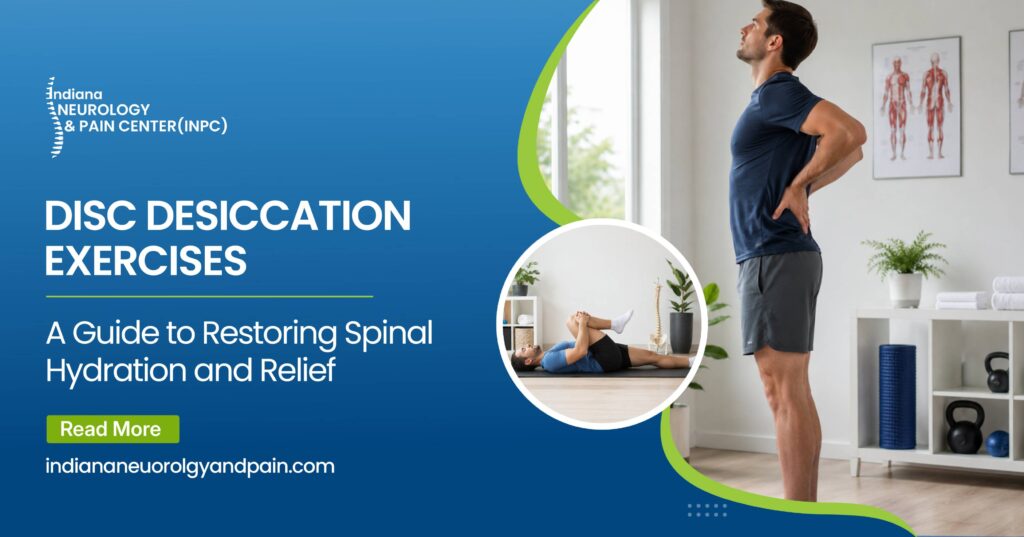
When it comes to safe stretches for degenerative disc disease, the real secret actually lies in your hips and hamstrings. Think about it: if your leg muscles are incredibly stiff, they constantly yank on your pelvis. This flattens out the natural curve in your lower back, dumping a massive amount of strain straight onto your fragile discs. Let’s loosen that up first.- Single Knee-to-Chest: Grab a yoga mat and lie down on your back. Go ahead and bend both knees, planting your feet firmly on the floor to start.
- Grab behind your right thigh and slowly pull your knee toward your chest. Keep your lower back totally relaxed against the floor. Hold it there for about 20 to 30 seconds, taking deep breaths, and then switch to the left leg. This is one of the most reliable exercises for degenerative discs in lower back because it instantly relieves pressure on pinched nerve roots.
- The Cat-Cow Flow: Get on your hands and knees. Let your stomach drop toward the floor as you look up slightly—take a deep breath in. Then, breathe out as you arch your back up toward the ceiling like a startled cat, letting your head drop. Flow back and forth between these two shapes about eight times. This simple motion acts like a pump for spinal fluids.
- Child’s Pose: Start on your knees, spread them a bit wider than your hips, and touch your big toes together. Sit your hips back onto your heels. Walk your hands forward on the floor and let your chest melt downward. It creates a gentle, passive stretch across the entire lower back without forcing anything.
Waking Up the Core
Once you are stretched out, you need to do exercises for degenerative discs that build endurance in your trunk. Stronger muscles mean less daily weight pressing down on your spine.- Pelvic Tilts: Lie on your back, knees bent, feet flat. Notice the small gap between your lower back and the floor? Tighten your stomach muscles to press your back flat against the mat, completely closing that gap. Hold it for five seconds. It’s a tiny movement, but it safely wakes up the deep abdominal muscles without forcing your spine to twist or bend.
- The Bird-Dog: Stay on your hands and knees. Keep your back completely flat—imagine balancing a cup of coffee on it. Reach your right arm straight out in front of you while kicking your left leg straight back. Hold it for a few seconds. If your hips tilt or your lower back dips, you’ve gone too far. Bring your arm and leg down and switch sides. Do about eight reps per side.
- Glute Bridges: Get comfortable flat on your back again. Bend your knees up and step your feet out just enough so they line up perfectly under your hips. Push down through your heels to lift your hips into the air until your body forms a straight ramp from your knees to your shoulders. Squeeze your glutes at the top. Lower down carefully. Building strong glutes means your lower back doesn’t have to absorb every shock when you walk or stand.
Table 1: Why These Movements Work
| Movement | Target Area | Main Goal | Why It Actually Works |
|---|---|---|---|
| Knee-to-Chest | Lower back and hips | Decompression | Gently opens the spaces where nerves exit the spine, reducing that “pinched” feeling. |
| Cat-Cow | Entire spine | Fluid movement | Acts as a mechanical pump, drawing hydration back into the dried-out disc tissue. |
| Bird-Dog | Deep core muscles | Balance & Bracing | Teaches your body how to keep the spine perfectly still while your arms and legs are moving. |
| Glute Bridge | Butt and hamstrings | Support | Shifts the burden of holding up your body weight from your fragile lower back to your powerful hip muscles. |
Struggling to figure out which movements help and which ones hurt? Don’t risk aggravating a dehydrated disc with guesses. Our medical team provides advanced, personalized pain management solutions tailored specifically to your spinal anatomy.
What Not to Do: Exercises to Avoid with Degenerative Disc Disease
It isn’t just about what you do in the gym; it’s also about what you skip. Figuring out which exercises to avoid with degenerative disc disease can literally save you from a severe flare-up or a new herniation.When discs dry out, their tough outer rings get brittle. They simply can’t handle heavy weight combined with twisting or deep bending. Doing the wrong move can cause micro-tears in the disc wall.- Traditional Crunches and Sit-ups: Sit-ups crush the lumbar spine under intense compressive force. They essentially squeeze the front of your discs, which can force the soft inner material backward directly into your spinal canal.
- Heavy Barbell Squats: Resting a heavy barbell across your shoulders pushes massive amounts of downward gravity straight into your dehydrated lumbar discs.
- Toe Touches: Standing up with straight legs and bending over to touch your toes puts terrible strain on the back wall of your discs. If your hamstrings are tight, your lower back takes the entire load.
- Running on Concrete: Pounding the pavement sends harsh shockwaves right up your legs. Without plump, hydrated discs to absorb that impact, your spinal bones just grind against each other.
Table 2: Tweaking Your Daily Habits
| Activity | Skip This | Try This Instead |
|---|---|---|
| Cardio Workouts | Jogging on hard streets or doing intense jump-rope circuits. | Swimming, using an elliptical machine, or fast-paced walking on level ground. |
| Picking Things Up | Bending over at the waist with locked knees. | Squatting down with your hips, keeping your chest up, and holding the item close to your belly. |
| Desk Jobs | Slouching over a laptop for three hours straight. | Using a chair with a lumbar pillow and forcing yourself to stand up every 30 minutes. |
Moving Forward and Finding Relief

Dr. Samiullah Kundi
Pain medicine & Neurologist
Dr Kundi is a board-certified neurologist with rigorous medical training and pain management expertise. Mr. Kundi has been certified by the American Board of Pain Medicine (ABPM), American Board of Psychiatry and Neurology (ABPN) – Clinical Neurophysiology American Board of Integrative Holistic Medicine (ABIHM), and American Board of Psychiatry and Neurology (ABPN) – Neurology. Dr. Kundi’s vision of serving people with neurological pain has led to the establishment of the Indiana Neurology and Pain Management Centre.
Frequently Asked Questions
You can’t magically refill a dried-out disc so it looks like it did when you were a teenager. The structural wear on an MRI usually stays. However, you absolutely can cure the pain. By doing regular disc desiccation exercises, building up your core, and fixing your posture, you can live a completely active, pain-free life even with degenerated discs.
Yes, it is excellent. Brisk walking is arguably one of the most accessible exercises for degenerative disc disease. The natural swinging motion of your arms and legs gently rotates the spine, which helps pump fluid into the discs without jarring them. Just make sure you have highly cushioned shoes.
Consistency beats intensity every single time. Doing 10 minutes of gentle stretching and core bracing every morning will yield far better results than trying to do a brutal one-hour back workout once a week.
Muscle soreness is totally normal. If your abs or glutes ache the next day, you are doing it right. But if you feel sharp, stabbing pains, or if you feel electricity, numbness, or tingling shooting down into your buttocks or legs, stop immediately. That means a nerve is getting pinched.