

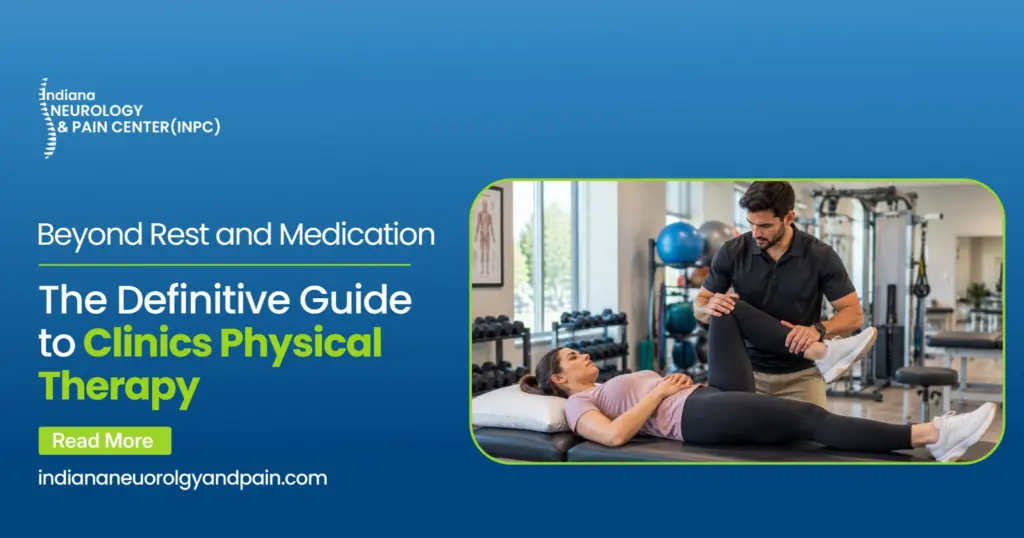
Disclaimer:
The information provided in this article is for educational and informational purposes only. It is not a substitute for professional medical advice, diagnosis or treatment. Always consult with a qualified healthcare provider, such as a licensed physician or physical therapist, before making any decisions regarding your health, starting a new treatment plan, or modifying an existing one. If you are experiencing acute or chronic pain, seek medical attention immediately.
Medically Reviewed By:
Dr. Samiullah Kundi, MD, Board-Certified Physician
Reviewed Date :
09/28/2026
Published Date :
10/05/2026
Table of Contents
A musculoskeletal injury doesn’t just cause localized pain; it forces your entire body to compensate. A compromised knee alters your gait. That altered gait eventually tweaks your lower back, spiraling into a chain reaction of mechanical dysfunction. While orthopedic surgery repairs structural damage and pharmacology dulls the pain, neither actually teaches your body how to move correctly again. That specific, critical phase of recovery is exactly why clinics physical therapy exist.
Physical rehabilitation isn’t a passive process of receiving massages and applying ice packs. It is an applied, evidence-based science rooted in kinesiology, neuromuscular re-education, and biomechanics. Whether someone is navigating the aftermath of a complex spinal fusion or trying to rebuild shoulder stability after a severe rotator cuff tear, understanding what actually happens inside these clinical facilities fundamentally changes the recovery trajectory.
Specialization Matters: Orthopedic vs. Sports Rehabilitation
Not every clinic operates with the same clinical objective. You wouldn’t take a high-performance athlete to a generalized post-op ward, and you wouldn’t subject a senior recovering from a total hip arthroplasty to plyometric jump training. The environment has to match the pathology.
An orthopedic physical therapy clinic caters heavily to post-surgical recovery, chronic pain management, and age-related joint degradation. The primary clinical objective here is restoring fundamental baseline function. A lot of the work here centers on physically mobilizing stiff joints and breaking up stubborn scar tissue. The goal is to carefully push healing ligaments without risking the actual surgical repair. You’ll see therapists using specialized protractors to track joint angles. They might use manual traction to open up space between compressed spinal discs, and they rely heavily on very strict resistance exercises.
Contrast that environment with a sports physical therapy center. Here, the baseline isn’t just walking comfortably—it’s explosive acceleration, lateral cutting, and high-impact load tolerance. Athletes require aggressive, highly monitored biomechanical correction. These facilities often look less like a traditional doctor’s office and more like a high-performance biomechanics lab.
Treatment in sports rehab integrates advanced modalities like blood flow restriction (BFR) training to build muscle without stressing the joints, dynamic force-plate analysis, and sport-specific agility drills. The goal goes beyond merely healing the torn tissue; it is entirely focused on correcting the underlying movement flaws to prevent the athlete from suffering that exact same injury the moment they step back onto the field.
Table 1: Clinical Focus Breakdown
| Rehabilitation Focus | Core Patient Demographic | Primary Conditions Treated | Key Clinical Modalities |
|---|---|---|---|
| Orthopedic Therapy | Post-surgical patients, seniors, individuals with chronic joint or back pain. | Osteoarthritis, joint replacements, spinal stenosis, frozen shoulder, fractures. | Joint mobilization, manual traction, gait retraining, fundamental core stabilization. |
| Sports Therapy | Amateur and professional athletes, tactical professionals (e.g., firefighters). | ACL/MCL tears, Achilles tendinopathy, tennis elbow, severe ankle sprains, concussions. | Plyometric conditioning, biomechanical video analysis, blood flow restriction (BFR). |
The Mechanics of Recovery: Clinics Physical Therapy Mobility Exercises
One of the biggest misconceptions about physical rehab is confusing flexibility with mobility. They are entirely different physiological mechanisms.
Flexibility is passive. It measures how far a muscle can be stretched by an external force. Mobility, however, is active. It dictates the amount of usable, controlled motion a joint possesses. If you can pull your leg up to your chest with your hands, you have flexibility. If you can lift it there using only your hip flexors and hold it steady in mid-air, you have mobility. This critical distinction dictates the entire approach to prescribing physical therapy mobility exercises.
Following a trauma, the nervous system actively throws up roadblocks. It deliberately inhibits muscle firing to protect the damaged area, leading to rapid muscular atrophy and severe joint stiffness. Physical therapists prescribe highly specific mobility drills to essentially hack the nervous system, proving to the brain that movement is safe again.
When a joint moves through its range of motion, it acts like a mechanical sponge, drawing in synovial fluid to lubricate the avascular articular cartilage. Without that movement, joints literally starve for nutrients.
Because of this, therapists follow a strict progression to safely reintroduce movement to traumatized tissue:
Table 2: The Phases of Therapeutic Mobility
| Phase of Mobility | How It Works | Clinical Objective | Example Intervention |
|---|---|---|---|
| Passive Range of Motion (PROM) | The therapist moves the patient’s relaxed limb. | Prevents joint capsule stiffness when muscles are too damaged to contract safely. | A therapist manually rotating a post-surgical shoulder through a pain-free arc. |
| Active-Assisted Range of Motion (AAROM) | The patient initiates movement, but utilizes tools or therapist assistance to complete the arc. | Begins neuromuscular firing without overloading the healing tendon or ligament. | Using a wall pulley system to help raise a weakened arm overhead. |
| Active Range of Motion (AROM) | The patient moves the joint entirely under their own muscular power. | Develops raw strength and helps joints feel secure. It also trains your body to know exactly where it is in space without having to look. | Performing unweighted heel slides or seated knee extensions independently. |
The Roadmap of Outpatient Physical Rehabilitation
Once a patient is discharged from acute hospital care or clears the initial trauma phase of an injury, the heavy lifting truly begins. Stepping into an outpatient setting takes real dedication. You are generally looking at two to three clinic visits every single week. For many, this routine lasts well over a month.
The entire process hinges on the initial evaluation. A licensed Doctor of Physical Therapy (DPT) doesn’t just read an MRI report and hand over a printout of stretches. They look at how the body compensates for the injury. Your therapist will check how much force individual muscles can generate. They look for hitches in how you walk. If a nerve is pinched, they find exactly where it’s happening. All of this data shapes your actual roadmap for recovery, known clinically as a Plan of Care.
During standard outpatient sessions, the therapist utilizes manual therapy techniques—like joint mobilizations or instrument-assisted soft tissue mobilization (IASTM)—to break down internal tissue adhesions. This is immediately followed by targeted therapeutic exercise to strengthen the newly mobilized joint in most clinics physical therapy protocols.
However, the true determinant of long-term success isn’t what happens inside the four walls of the clinic. It is absolute patient compliance with a customized Home Exercise Program (HEP). The clinical sessions essentially set the foundation and unlock the restricted tissue; the daily homework solidifies the structural gains. Failing to complete the HEP usually results in a stalled recovery.
Direct Access: Taking Control of Your Care
For residents looking for physical therapy in Indianapolis, navigating the healthcare system used to mean enduring a frustrating, expensive bottleneck. Historically, patients had to schedule a primary care visit, wait weeks for an opening, pay a copay, and finally get a referral just to see a physical therapist. That is no longer the reality.
Thanks to Direct Access legislation in Indiana (specifically Senate Bill 586), patients can now bypass the physician referral entirely for the first 42 calendar days of treatment. This means if you tweak your lower back lifting a heavy box on a Sunday, you can walk directly into a clinic on Monday morning to start your evaluation.
Stripping away that bureaucratic delay is a massive advantage. It prevents acute, easily manageable injuries from chronifying into severe, complex mechanical dysfunctions while you wait for a doctor’s permission to seek movement-based care.
But with easier access comes the responsibility of choice. Finding the best physical therapy clinic in Indianapolis requires looking past flashy marketing and polished waiting rooms. You need a facility that prioritizes one-on-one patient care rather than a clinic that bounces a single therapist between three or four patients simultaneously. Look for providers who emphasize evidence-based practice and active loading over outdated, passive modalities (like relying entirely on hot packs and electrical stimulation without making the patient actually move).
Moving Forward: Restoring Your Independence
Dr. Samiullah Kundi
Pain medicine & Neurologist
Dr Kundi is a board-certified neurologist with rigorous medical training and pain management expertise. Mr. Kundi has been certified by the American Board of Pain Medicine (ABPM), American Board of Psychiatry and Neurology (ABPN) – Clinical Neurophysiology American Board of Integrative Holistic Medicine (ABIHM), and American Board of Psychiatry and Neurology (ABPN) – Neurology. Dr. Kundi’s vision of serving people with neurological pain has led to the establishment of the Indiana Neurology and Pain Management Centre.
Frequently Asked Questions
In most cases, no. Physical therapists are trained movement specialists who diagnose musculoskeletal dysfunctions based on biomechanical tests, strength grading, and functional movement screens. If a therapist suspects a severe structural tear or a non-musculoskeletal issue during the evaluation, they will immediately refer you to an orthopedist or physician for imaging.
Pushing a tight joint capsule or working a weak muscle is going to make you sore. That is just reality. Your body has to remodel the tissue, and that process comes with a dull ache known as DOMS (delayed onset muscle soreness). With that said, you should never feel a sharp, stabbing sensation. Your therapist is always watching your reactions. If something crosses the line from ‘working hard’ to actual damage, they dial the intensity back immediately.
Dress as if you are going to the gym. Wear loose, comfortable athletic clothing and supportive closed-toe footwear. The clothing must allow the physical therapist easy visual and physical access to the body part being treated. If you are receiving therapy for a knee or hip issue, wearing athletic shorts is highly recommended.
You won’t find a one-size-fits-all answer for this. Tissues heal on their own schedule. It depends on your age, your overall health, and how bad the initial injury was. A simple calf strain? You might be done in a handful of visits. Rebuilding a knee after ACL surgery, on the other hand, means you’ll be putting in the work for several months. Your therapist will lay out a realistic timeline during your first visit.
References
Active
Cleveland Clinic. Tendinopathy: What it is, symptoms, causes & treatment. Cleveland Clinic. Updated December 9, 2024.
Cleveland Clinic. What is muscle hypertrophy? Cleveland Clinic. Updated September 29, 2025.